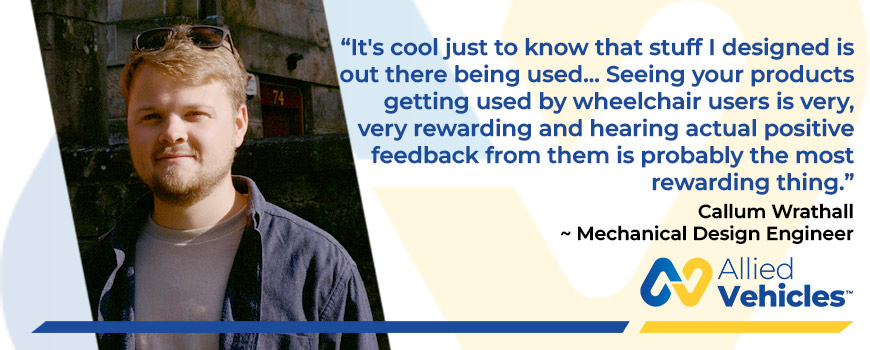
Callum Wrathall, 25, is one of our Mechanical Design Engineers. We sat down with him to chat about the design process, talking to school kids about engineering, and what keeps him going when things get busy.
What does a typical day in your role at Allied look like?
If we’re at the start of the project we’re going to spend more time on computers, designing and creating technical drawings. Towards the end of the project, especially when it gets to the product implementation stage, we’re spending more time in our development workshop, pre-production and the production lines.
We will usually build a prototype conversion in our workshop first, and then introduce it to production. But in general, it’s probably about 75% computer time, as an average across a project.
You’ve been here about three years. Did you join Allied straight after uni?
Almost. I finished university in May 2020, in the middle of COVID, so there were no jobs around. I had a part-time job in a bike shop when I was at Uni, so I took that job full time for just over a year and then started here in 2021.
What drew you to Allied and how did you get started here?
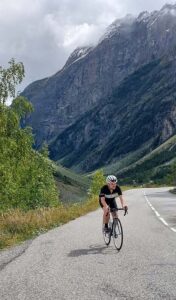 I’ve always had an interest in cars. Cars and bikes. A lot of my studies were to do with cars, so I knew that I wanted to go into something automotive.
There were other jobs that came up but nothing I thought I was going to be passionate about because I knew that I wanted to work with cars in some way. Then this job came up and it just seemed perfect.
We hear you did some racing at uni?
I was part of a university race team in a series called Formula Student. It’s time attack rather than wheel-to-wheel racing because no one is a licensed race car driver. You design and build a single seat, motorbike engine powered race car and go down Silverstone and race them.
I probably spent more time doing that than my degree but probably learned more. A lot of the modelling that we do here, most of that stuff was learned through that project rather than through my actual studies.
Tell us about the work that you do with Primary Engineer.
That’s probably the most nervous I’ve been since my job interview here, giving a presentation to a load of 10-year-olds.
The competition starts off as a worksheet that the pupils fill out and it’s meant to be an interesting engineering design that they want to see through, and an engineer goes out and does a presentation and a workshop with them.
I did a Q&A session with them and tried to encourage them that there were no limits on who can be an engineer. I try to get them to look at what their hobbies are, and how they can transfer that into becoming an engineer, because that’s what I did. I took my hobbies which was working on cars and bikes and turned it into a career.
Engineering has traditionally been a male-dominated field, do you have many girls taking part in Primary Engineer?
From the classroom session that I had it was great because I got good engagement from all the pupils, and it was a mixed class.
But when I was at university it was very clear that there’s a gap there. I think Primary Engineer is a great place to tackle it because that’s the age at which you start to get inspired by people. You can see someone who you relate to, and if you can see that they’re doing something that you think is achievable, you can see yourself in their shoes.
What sort of ideas do the kids have?
A real mix. One of the best ones that I saw was from a girl who has a deaf brother. Her idea was to have a bracelet that vibrates like a notification, but it would be linked into things like traffic crossings. So, it was a safety thing.
But then there was a boy who must have watched a documentary or something he shouldn’t have, because his idea was to build a fighter jet to protect us when the UK starts getting bombed! So, I had to turn that one round and we ended up with a plane that was able to drop aid packages rather than bombs, make it a bit more humanitarian.
What do you enjoy most about your job?
Our ability to turn around designs. We can very quickly manufacture stuff because we have our production department on site, our development work is very quick. If we come across a problem, we can get parts re-made the same day, whereas if all that stuff was external you might be waiting weeks.
With the new Ford Custom, we’d been designing that for almost two years. So as soon as we got our first vehicle on site, we were ready to convert it. We’ve now got five of them and you’re only just seeing the unconverted vehicles being sold in Ford dealerships, which is very impressive from us.
What are the challenges that you face in your role?
Because we react so fast, it means that we are really busy. Everyone’s usually got a couple of projects on the go, so you’re quite spread over everything that you work on.
I’ve got friends who work for big OEMs, and they’ll spend a year working on one button on a dashboard, whereas the approach that we have is everyone in the department should be able to do every bit of design work. Which means we’re well rounded, which is good, but it can be a lot.
But the department’s very supportive. We’re able to share workloads easily. No one’s left to struggle on their own.
If you need help, it’s there, and our department is run really well. Mark Rae does an excellent job and Greg Barnard, who’s our Design Lead, does a great job of standardising a lot of the design work that we do. That means once we have a good working solution for something we’re able to use it across multiple different vehicles.
What keeps you motivated?
The four-day week is amazing. That’s a great thing. And like I said, we’re always busy so there’s always stuff do.
I have had projects that seem to go on for ages, but I know that no matter how difficult or long something seems, give it a month and I will be somewhere completely different on this project.
Nothing can stay stagnant for more than a week or questions will be asked. “Why isn’t this progressing? Is there an issue with it? If there is an issue with that, how can we get past that?” So, if I’m in a bit of a rut with a project, I just think “in a couple of weeks this will be sorted out.”
It must be quite gratifying when you see a finished project on a vehicle.
It is. The new Ford custom, what we call a V710, will be coming in the next couple of months, and I designed the ramp for that. That was probably the nicest one so far, that vehicle’s had really excellent feedback, which is great.
It’s still early days, but it’s probably the best WAV we’ve ever done. There’s a lot of a lot of things we’ve improved on with it.
What do you do to wind down after a busy week?
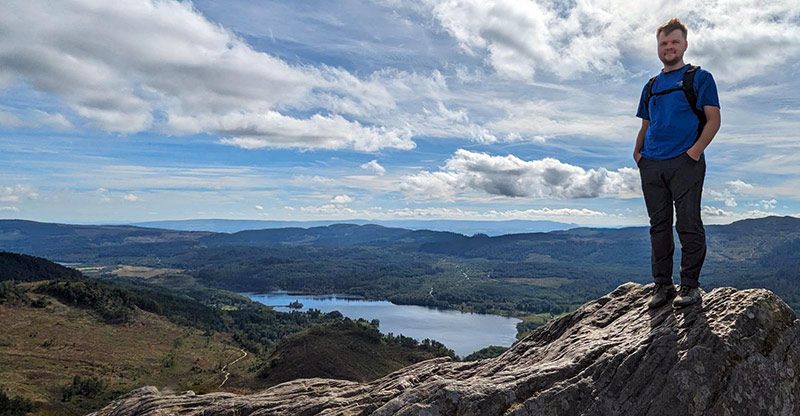
I try and keep very busy, if I don’t have something to do, I will do very little. So, I always have multiple projects on the go, both in and out of work.
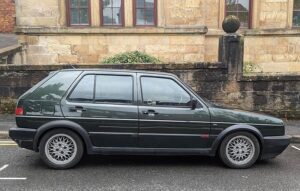 I’ve been renovating my flat, and I also bought an old Volkswagen Golf, 1992 GTI 16V which I’ve been restoring on and off for about a year.
I enjoy cycling too, and I build custom bike frames in my Dad’s workshop. I model the frame first to get the geometery suited to the rider. Then I take steel tubes, cut them and braze them together. I’ve made seven custom bikes in the past five for myself and other family members.
What has been your favourite thing about working at Allied?
It’s cool just to know that stuff I designed is out there being used. I know my girlfriend finds it annoying when we drive down the motorway and I see a car from Allied and I’m like, “oh, I did this. I designed that piece in there!”
I’ve been to a couple of trade shows and seeing your products getting used by wheelchair users is very, very rewarding. As an engineer, hearing actual positive feedback from them is probably the most rewarding thing.